
In addition to the negative sentiment as a consequence of changes announced in the Union Budget 2023-24 concerning tax treatment for debt repayment distribution, concerns about hiring slowdown and its leasing impact, as well as higher interest rates, could blight the sector in the near term.

India is likely to be the fastest-growing Asian economy in 2022-23, according to analysts at Morgan Stanley. They expect India's gross domestic product growth to average 7 per cent during this period - the strongest among the largest economies - and contributing 28 per cent and 22 per cent to Asian and global growth, respectively. The Indian economy, they said, is set for its best run in over a decade as pent-up demand is unleashed.

'The RBI's MPC will maintain the current policy rates (6.50%) at the policy meeting, given ongoing inflationary pressures.'

After lagging behind benchmarks and broader indices over the past five years, real estate investment trusts (Reits) have outperformed them since the start of 2024. The four listed Reits have posted an average return of 16 per cent year-to-date, compared to 9.9 per cent for the S&P BSE Sensex and 11 per cent for the National Stock Exchange Nifty.

Macroeconomic data announcements, global factors and trading activity of foreign investors would be the key triggers for the domestic stock markets this week, analysts said. Last week, the benchmark indices joined the broader market's party despite a host of negative global cues. In the broader market, the BSE midcap and smallcap gauges hit their all-time highs on Friday.

The revision was announced before Indian markets opened on Thursday.
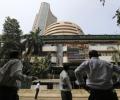
After rallying over 300 points, the 30-share BSE Sensex ended 169.14 points, or 0.42 per cent, higher at 40,581.71. Similarly, the broader NSE Nifty settled 61.65 points, or 0.52 per cent, higher at 11,971.80.

'Asset allocation should be driven much more by long-term factors rather than the market scenario at any particular point in time.'

Nearly 9 out of 10 ultra-high-net-worth individuals in India saw an increase in wealth during in 2022, and the super rich expect their wealth to grow further this year, according to a Knight Frank survey. In its latest 'The Wealth Report: Outlook 2023', real estate consultant Knight Frank has revealed the findings of the global survey. Among Indian respondents, the consultant said 88 per cent saw a rise in UHNWI's (ultra-high-net-worth individuals) wealth in 2022.

Reliance Industries Ltd, India's most valuable company, is back on a growth path after six months of challenges as it posted better than expected earnings in the December quarter, brokerages said.

'Trust a fund manager, buy some small-cap funds and stay invested.'

In a dazzling resurgence, foreign investors have graced the Indian equity markets with an influx of nearly Rs 1.5 lakh crore in 2023, fuelled by optimism over the country's resilient economic fundamentals amid shadows of a gloomy global scenario. Experts believe that the positive trend may continue in 2024. This follows Indian equities witnessing the worst-ever net outflow of Rs 1.21 lakh crore by FPIs in 2022 on aggressive rate hikes by the central banks globally after net inflows for three consecutive years.

Largecap, flexicap, and balanced advantage funds together recorded a net inflow of Rs 9,363 crore in August, representing a 70% increase from the previous month's total.

'We are in a sweet spot.' 'Equity, on a standalone basis, will continue to remain the asset class to stay invested in.'

'As the Indian economy continues to expand over the next three years, mid- and small-caps should do well as they have higher exposure to the domestic economy than large-caps.'

'If you look at the order books of capital equipment companies or money deployed on the ground, there is forward movement in terms of actual investment by the private sector.'

Moody's expect RBI to hold policy 'repo' rate steady to have a neutral stance in this growth

Bankers said the outlook of M&As in India in 2024, especially in the second half after the Lok Sabha election, seems relatively better.

Strong macroeconomic headwinds causing turbulence in the $245-billion Indian IT industry are yet to calm down. Top Indian IT services companies are likely to post a decline or just marginal growth in sequential revenue in Q1FY24 because of a soft discretionary spending environment. Though the first quarter is seasonally strong for IT firms, "June 2023 will be an exception", according to analysts at Kotak Institutional Equities.

Moody's Investors Service on Friday slashed its estimate of India's GDP growth during the 2020 calendar year to 2.5 per cent from an earlier estimate of 5.3 per cent, on account of the rising economic cost of the coronavirus pandemic.

'...over the long-term can be done only by investing in equities.' 'And during weak macros, one needs t1o allocate more than drawing it down, because they offer the best entry point.'

Moody's on Monday slashed India's growth forecast for 2020 to 5.4 per cent from 6.6 per cent projected earlier, on slower than expected economic recovery. In its update on Global Macro Outlook, Moody's Investors Service said India's economy has decelerated rapidly over the last 2 years and economic recovery is likely to be 'shallow'.

India's GDP is estimated to grow at 7.4 per cent in the financial year 2022-23 with rising prices triggered by the Russia-Ukraine conflict posing as the biggest challenge to the global economic recovery, Ficci's Economic Outlook Survey released on Sunday said. According to the survey, the Reserve Bank of India (RBI) is likely to start a rate hike cycle in the second half of 2022, while a repo rate hike of 50-75 bps is expected by the end of the current fiscal. The RBI is expected to continue supporting the ongoing economic recovery by keeping the repo rate unchanged in its April policy review, the survey said.

Macroeconomic data announcements, global trends and trading activity of foreign investors would guide momentum in the equity market this week, analysts said. Markets ended a five-week losing streak and gained nearly a per cent last week, helped by a sharp rebound on Friday. Last week, the BSE benchmark jumped 500.65 points or 0.77 per cent and the Nifty gained 169.5 points or 0.87 per cent.

Many investors want to exit equities now and re-enter when they begin to rise. Such timing is difficult to pull off.

Moody's Investors Service on Friday affirmed India's rating at the lowest investment grade of 'Baa3', with a stable outlook, saying high growth will support a gradual increase in income levels, but flagged risks of populist policies due to rise in political tensions. Moody's said although India's potential growth has come down in the past 7-10 years, the growth would outpace all other G20 economies through at least the next two years, driven by domestic demand. Moody's said the restoration of robust growth prospects post-pandemic, the effective commitment to inflation targeting and the rehabilitation of the financial system aided by reform supports its view of strengthening monetary and macro policy effectiveness.

'These are the two core skill sets that are required for any job, in any profession.'

Indian equity markets have a limited upside potential in the near-term as they negotiate the ensuing cyclical slowdown, wrote analysts at Nomura in a recent coauthored report led by Saion Mukherjee, their managing director and head of equity research for India. He, however, believes that the foundations are in place for sustainable growth over the medium-to-long term, and hence suggests a 'buy on dips' strategy to equity investors. As an investment strategy, Nomura prefers domestic-oriented sectors and companies over exporters, and prefers stocks that provide valuation comfort. Industrials and banks are their overweight sectors, while IT services and consumer discretionary are their underweight sectors.

'...and defensive until the global macro headwinds turn more benign.'

India decisively withstood global headwinds in 2023 and is likely to remain as the world's fastest-growing major economy on the back of growing demand, moderate inflation, stable interest rate regime and robust foreign exchange reserves. Despite widespread pessimism witnessed among the developed nations and the worsening geopolitical situation, India recorded a gross domestic product (GDP) expansion of 6.1 per cent in the March quarter. The growth moved up to 7.8 per cent in the June quarter and was 7.6 per cent in the September quarter. For the first six months of this fiscal, the growth was 7.7 per cent.

India, along with Southeast Asian countries such as Indonesia, is expected to sustain growth in the medium-term in Asia region, replacing China as the key growth driver, Morgan Stanley and Nomura said in two separate reports released on Monday. While Morgan Stanley projected a 6.2 per cent gross domestic product (GDP) growth forecast for India in FY24, Nomura estimated the Indian economy to grow at 5.9 per cent in 2023. "Even with a slowing China, we expect GDP growth in Asia to sustainably outperform other emerging markets and the US. India and Southeast Asia are set to be the fastest-growing economies this decade.

'Like every Budget, this time, too, there is chatter around tinkering with the long-term capital gains tax.' 'Investors may not want to jump into the markets until there is clarity on this front.'

Year 2017 will be a benign year for FII flows into India feels Akash Singhania, deputy chief investment officer, DHFL Pramerica Asset Managers.

In a memorable year for the equity market, Dalal Street investors added a whopping Rs 81.90 lakh crore to their wealth in 2023 as a raft of positive factors powered a stellar rally in stocks. Experts said India's strong macroeconomic fundamentals, political stability owing to the BJP's success in recent elections in three significant states, optimistic corporate earnings outlook, signals from the US Federal Reserve about three prospective rate cuts next year and heavy retail investors participation played a major role in fuelling the stock market rally in 2023. In the year 2023, the 30-share BSE Sensex jumped 11,399.52 points or 18.73 per cent.

It is a wonder how pervasive and long-lasting the damage can be from a balance-sheet crisis, says Suman Bery.
'We like certain stocks from banking, insurance, retail, hospitals and capital goods.' 'Though some of these stocks may seem expensive, they will compound well over the long term, thus justifying their current multiples.'

The impact of the banking crisis in the US was visible in IT bellwether Tata Consultancy Services' (TCS) weak performance in the March quarter of fiscal 2023 (Q4FY23). The firm witnessed slower revenue growth in Q4FY23 and failed to meet its FY23 exit Ebit margin of 25 per cent as some clients, especially in the North American region, took to pausing projects and rising onsite costs offset utilisation gains. Sequentially, the company's revenue grew by just 0.6 per cent on a constant currency basis, which was one of the slowest paces in over 11 quarters.

India's second largest IT services company Infosys on Thursday reported a 3.1 per cent year-on-year rise in net profit to Rs 6,215 crore for the September 2023 quarter. The earnings (before minority interest) of the Bengaluru-based company stood at Rs 6,026 crore in the year-ago period. The company - which competes in the IT services market with TCS, Wipro, HCL Technologies and others - saw its revenue rising 6.7 per cent to Rs 38,994 crore for the just-ended September quarter.

JP Morgan has downgraded the Indian information technology sector to 'underweight' as it believes the heydays of the sector are over. Rising margin headwinds in the near-term and the revenue headwinds in the medium-term from a potential macro slowdown, Ankur Rudra and Bhavik Mehta of JP Morgan said in the report, will mean that the sector's earnings upgrade cycle is behind. "We see peak revenue growth behind us and earnings before interest and taxes (EBIT) margins trending down from inflation, mean revision.

The watershed 2014 Indian election has thrown a decisive mandate after 30 years of coalition-based governments.
